
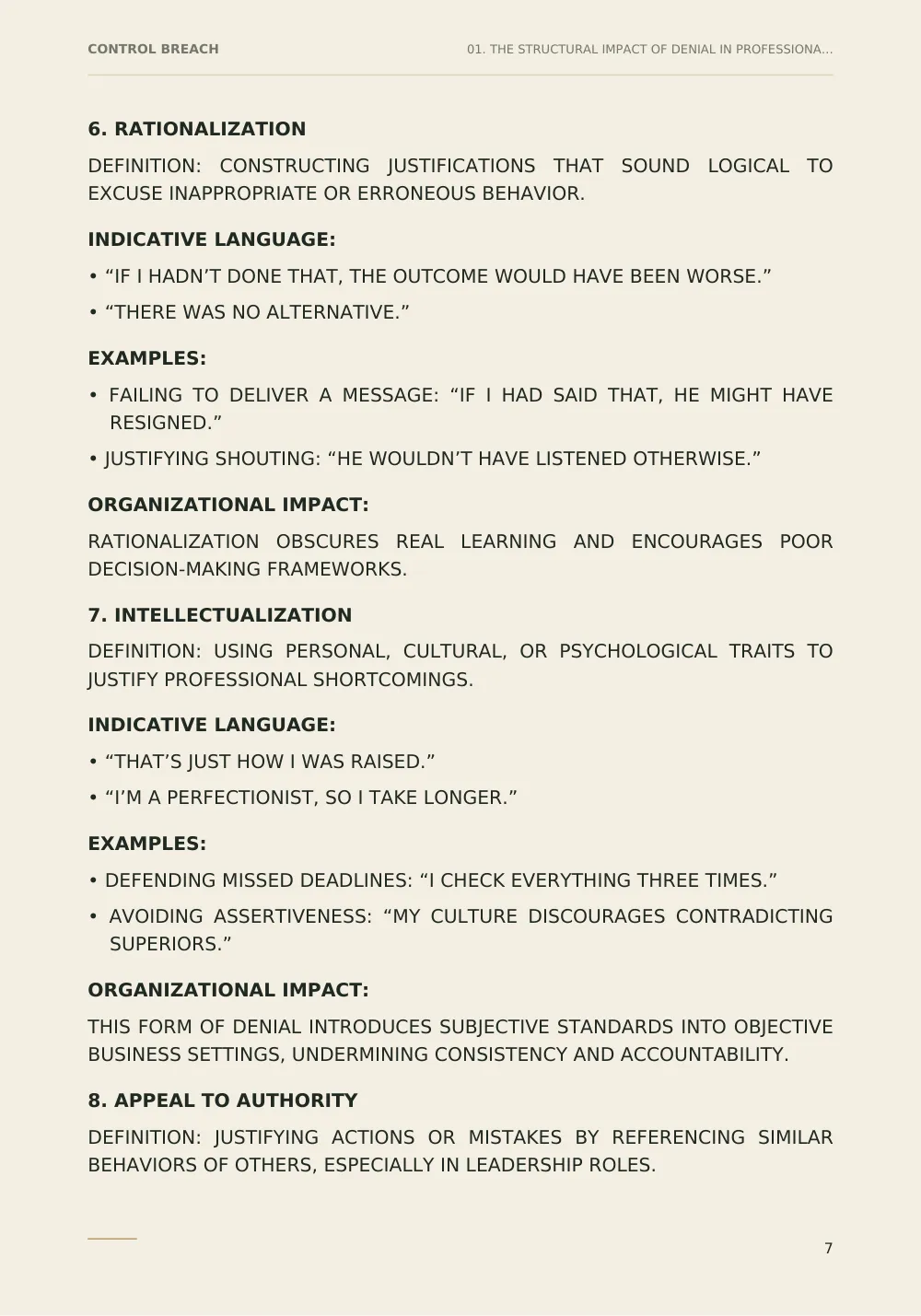
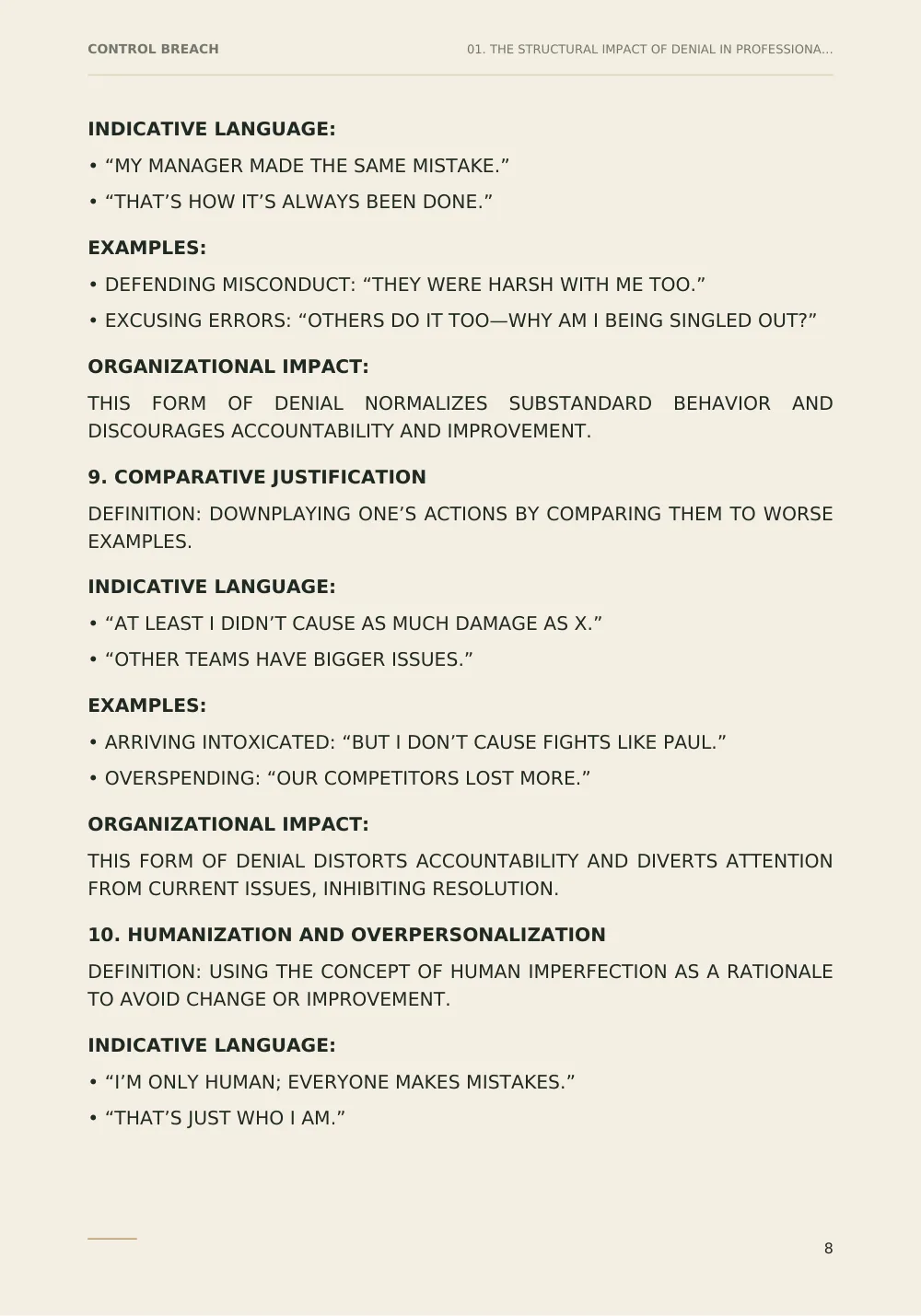
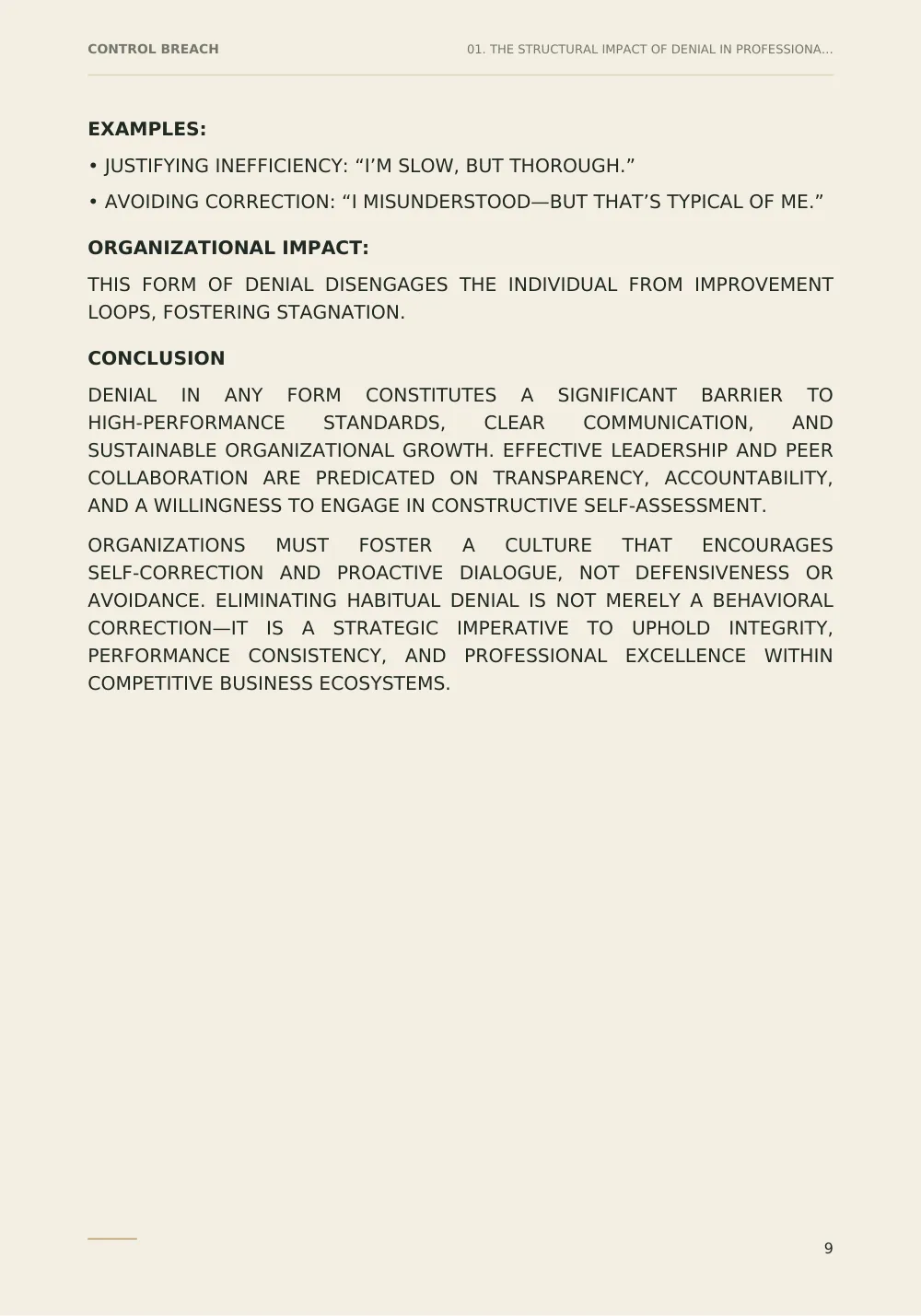
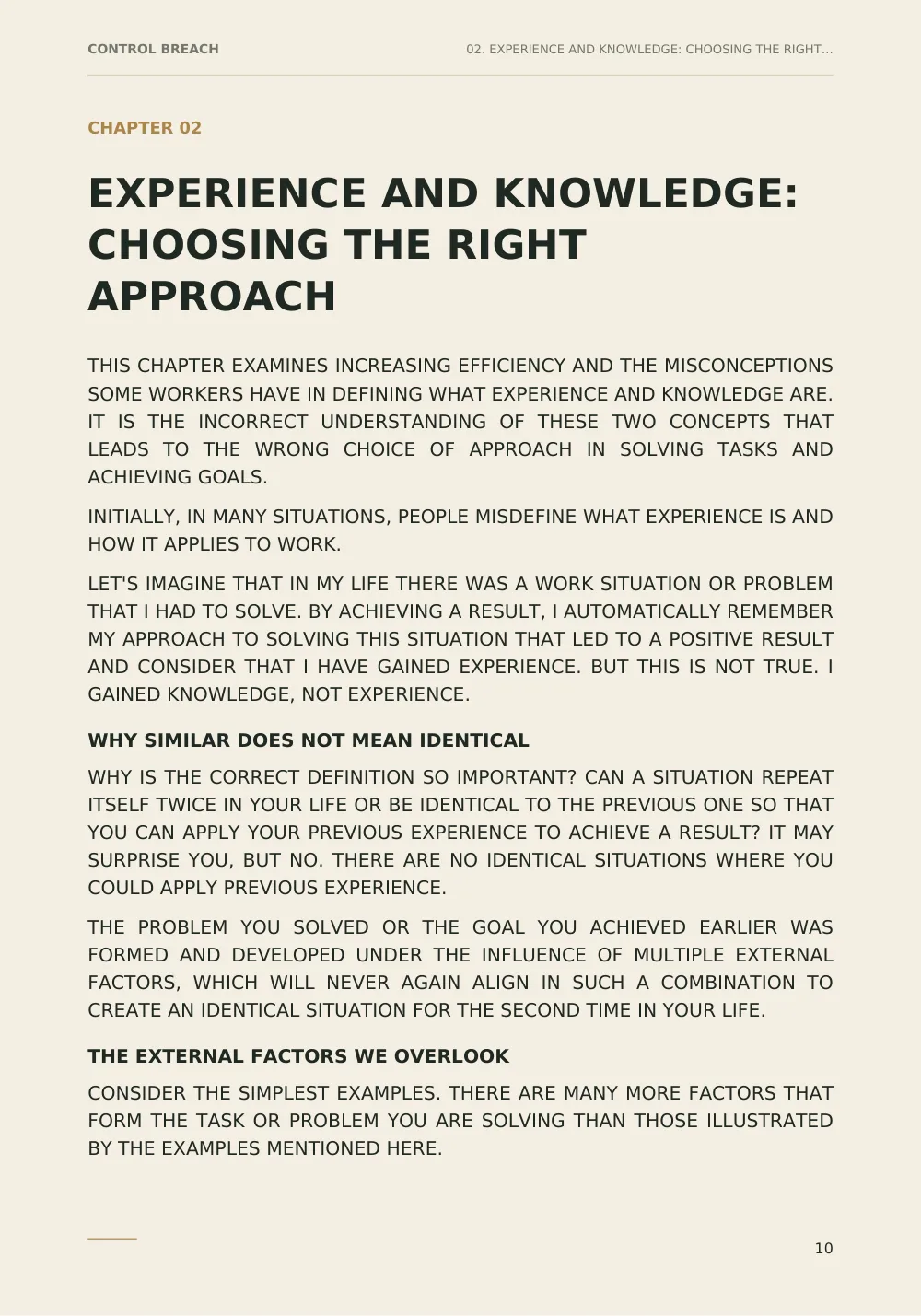

Free to read: chapters 01, 02 and 33
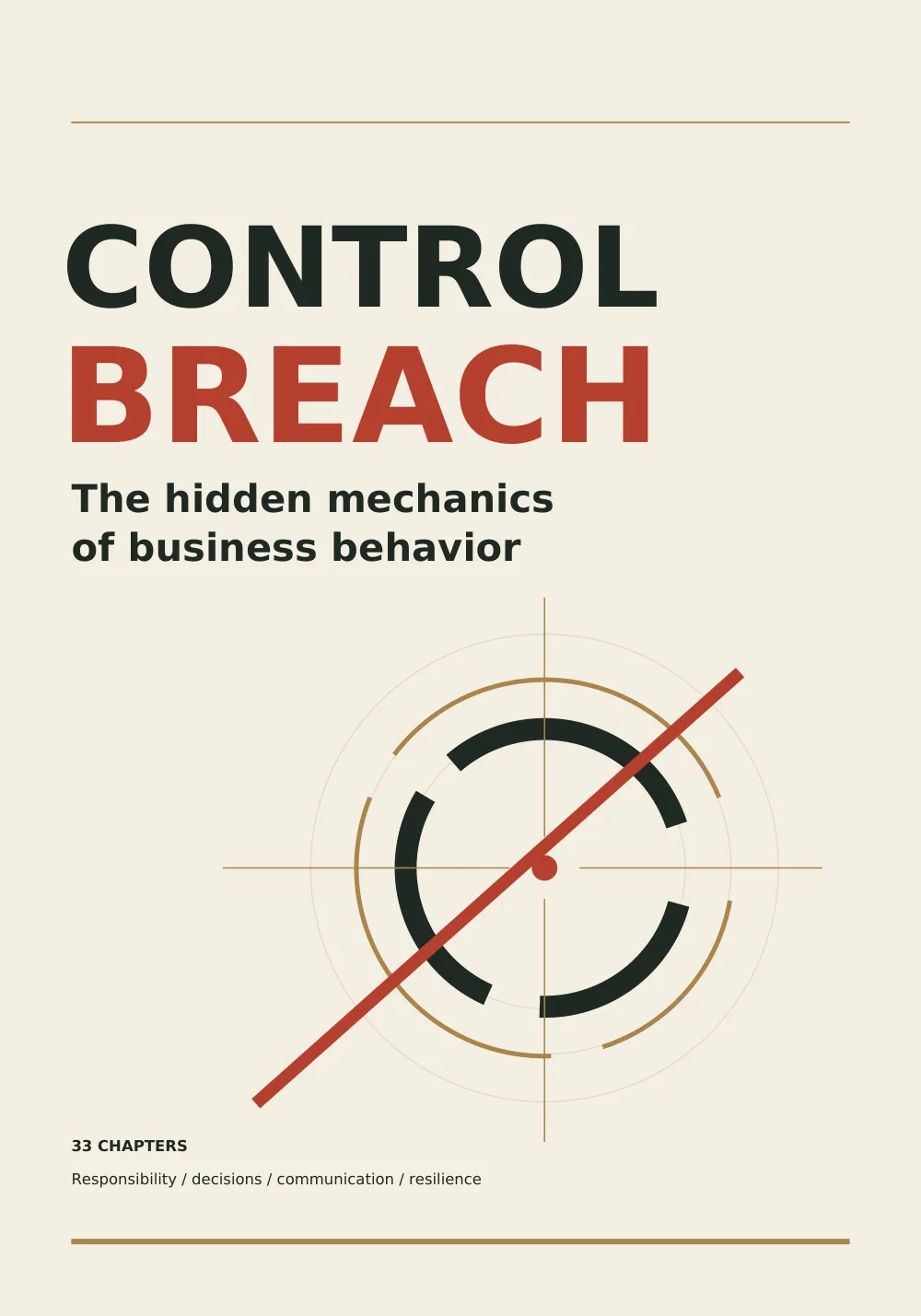
CONTROL BREACH · 152 pages · 33 chapters · English · PDF
Everyone is working.
Why do the same problems keep returning?
Tasks move between people, but responsibility stays unclear. Mistakes are acknowledged, then repeated. Urgent requests push planned work aside. People leave the same meeting with different understandings. Experienced teams develop working habits that become fragile when someone leaves or conditions change.
CONTROL BREACH examines these patterns through explanations, examples and practical approaches to communication, responsibility and decision-making. Each chapter takes one recurring situation, names the mechanism behind it and shows how to recognise it in your own company before it turns into a habit.
The book is written for business owners, team leaders and managers who are responsible for how work gets done. You can read it in order or start with the chapter that matches the situation you are facing today.
The headache it addresses
Recognize any of these situations?
| What happens in the company | What the book examines |
|---|---|
| A task passes through several people, but nobody clearly owns the result. | Responsibility and the coordination of connected processes. |
| A mistake is acknowledged — and then repeated. | The process of acknowledging and correcting mistakes. |
| People are constantly busy with urgent problems, and planned work keeps slipping. | The difference between proactive and reactive behavior, and how competing requests are prioritized. |
| Everyone agrees in the meeting, then acts differently afterwards. | Questions, unspoken assumptions and different versions of reality. |
| An experienced team works well only while the same people stay in it. | The degradation of closed work cycles. |
What you will find inside
Five areas, 33 chapters
Responsibility and mistakes
How the book distinguishes responsibility from monitoring, and how it structures the process of acknowledging and correcting mistakes.
Communication and assumptions
How questions clarify tasks, how people-pleasing interferes with direct communication, and how different versions of reality emerge within a team.
Decisions and priorities
How changing conditions affect the use of previous knowledge, how competing requests are prioritized, and how proactive behavior differs from reactive behavior.
Team processes
How local adaptations can develop into closed work cycles, making processes dependent on particular people.
Pressure and internal resources
Approaches to stress, anger, fear, emotional reactions and the management of internal resources.
Read the material before you decide
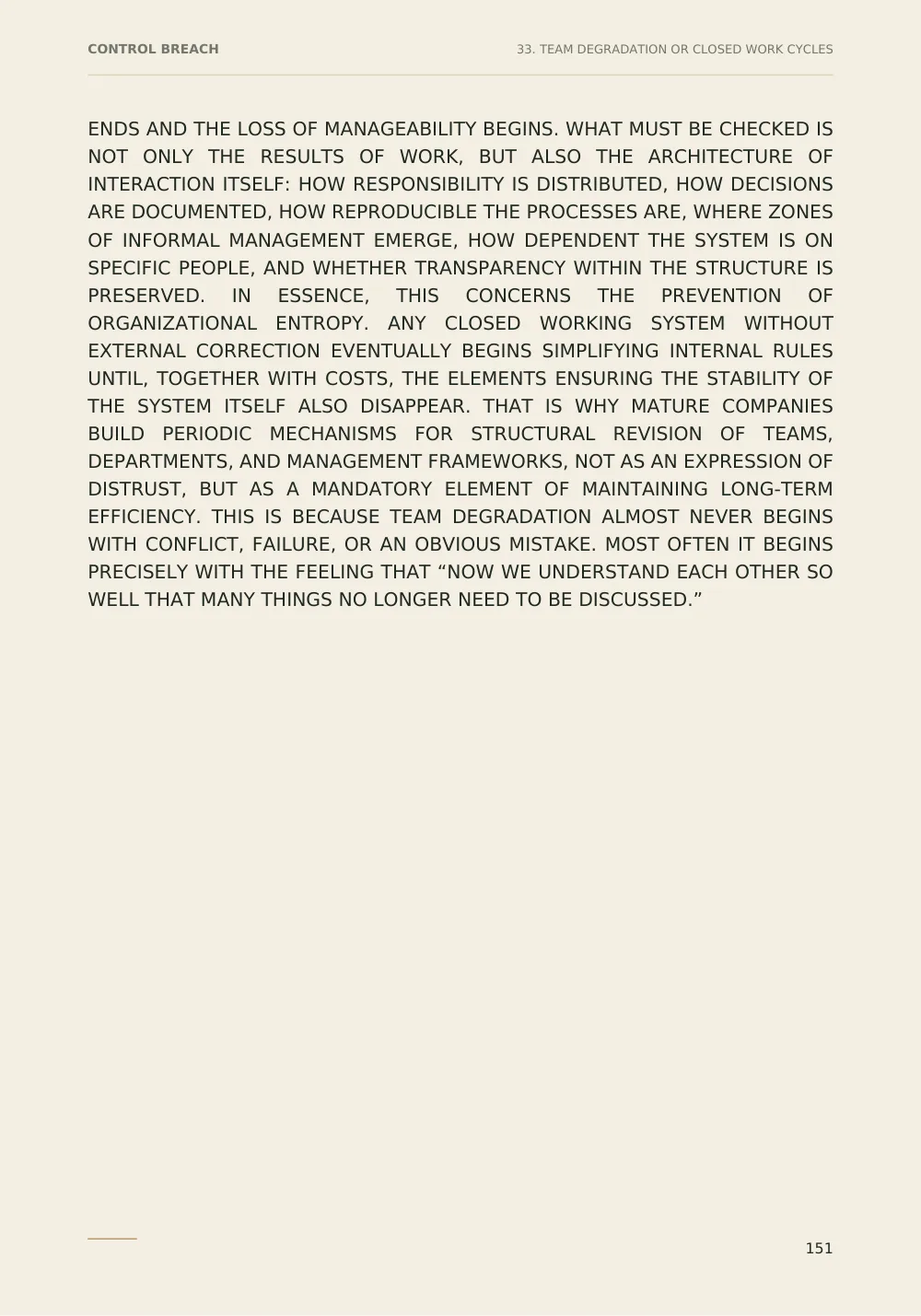
Free chapter: Team Degradation or Closed Work Cycles
See how the book explains the shift from adapting processes for efficiency to adapting them for convenience — and the problems that can follow. Chapters 01 and 02 are open too. No sign-up.
Contents
All 33 chapters
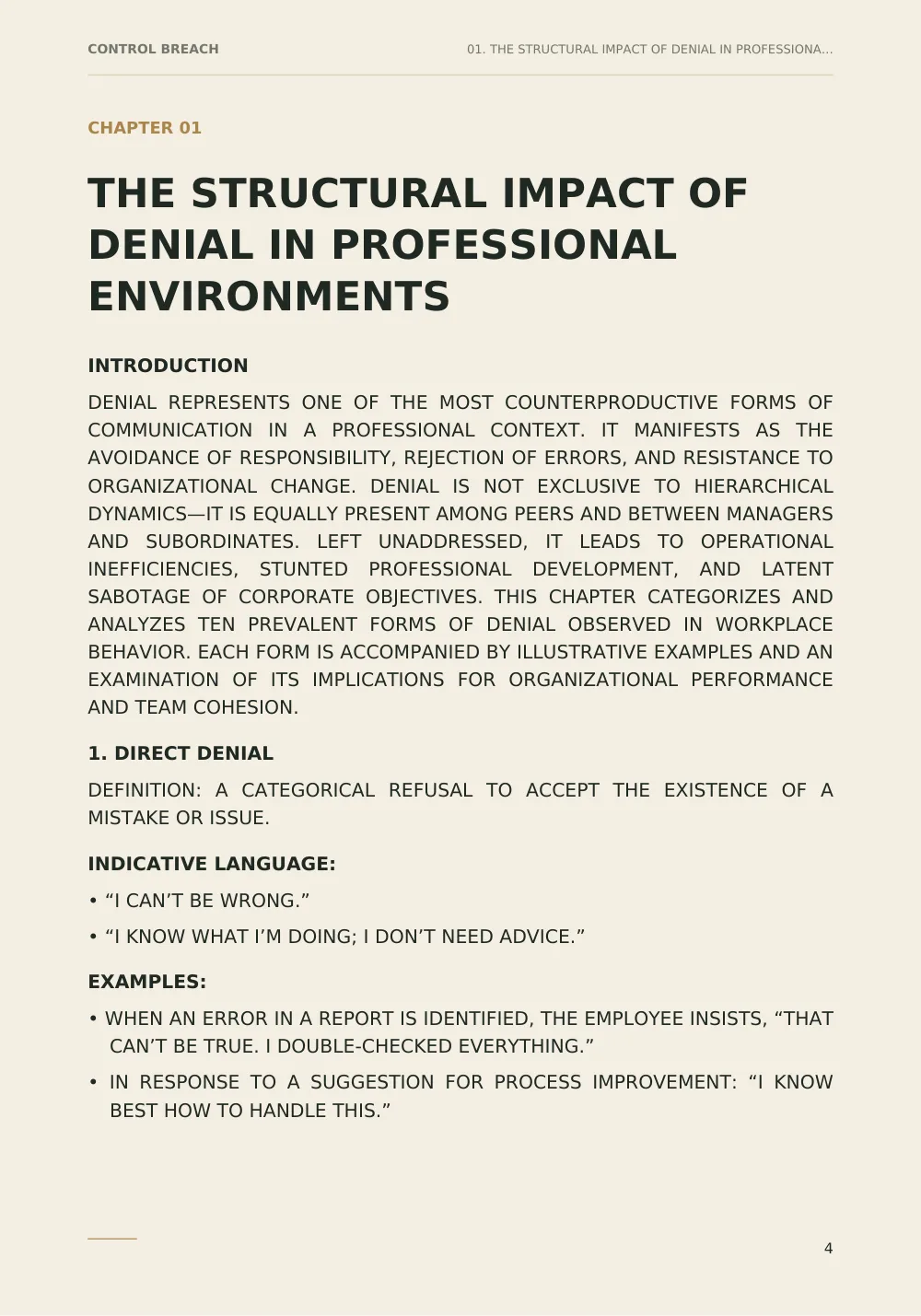
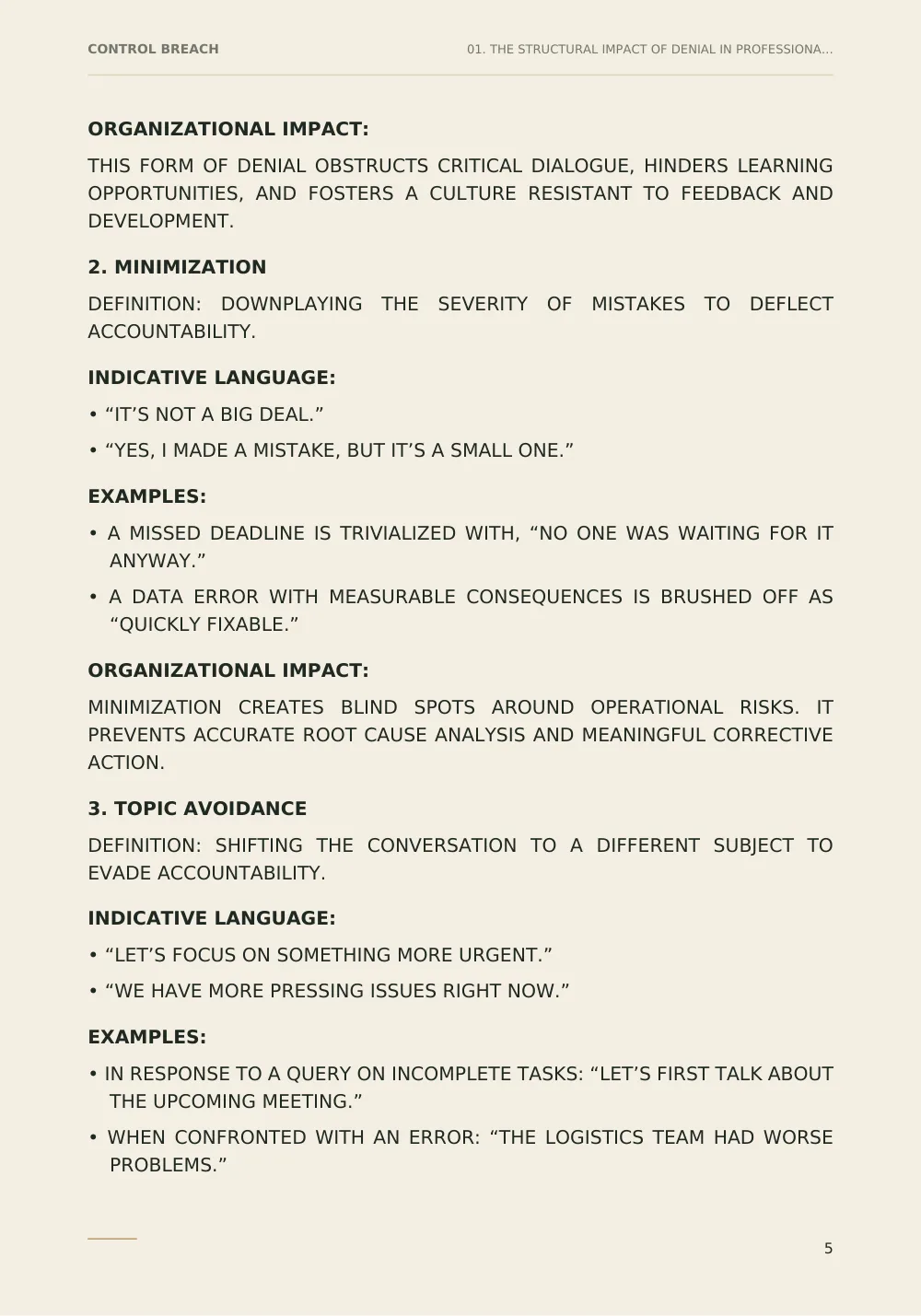
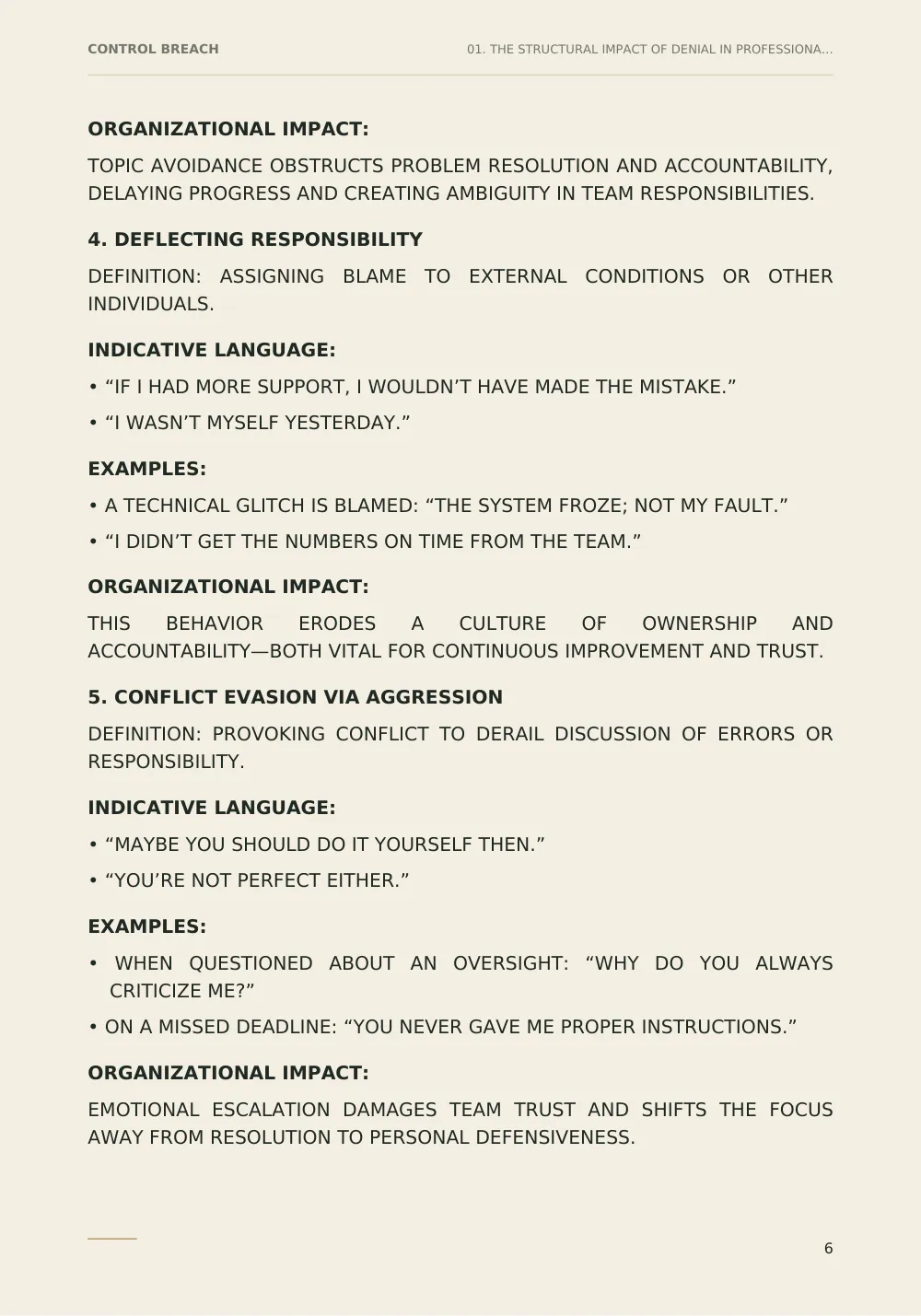
- 01The structural impact of denial in professional environmentsFree
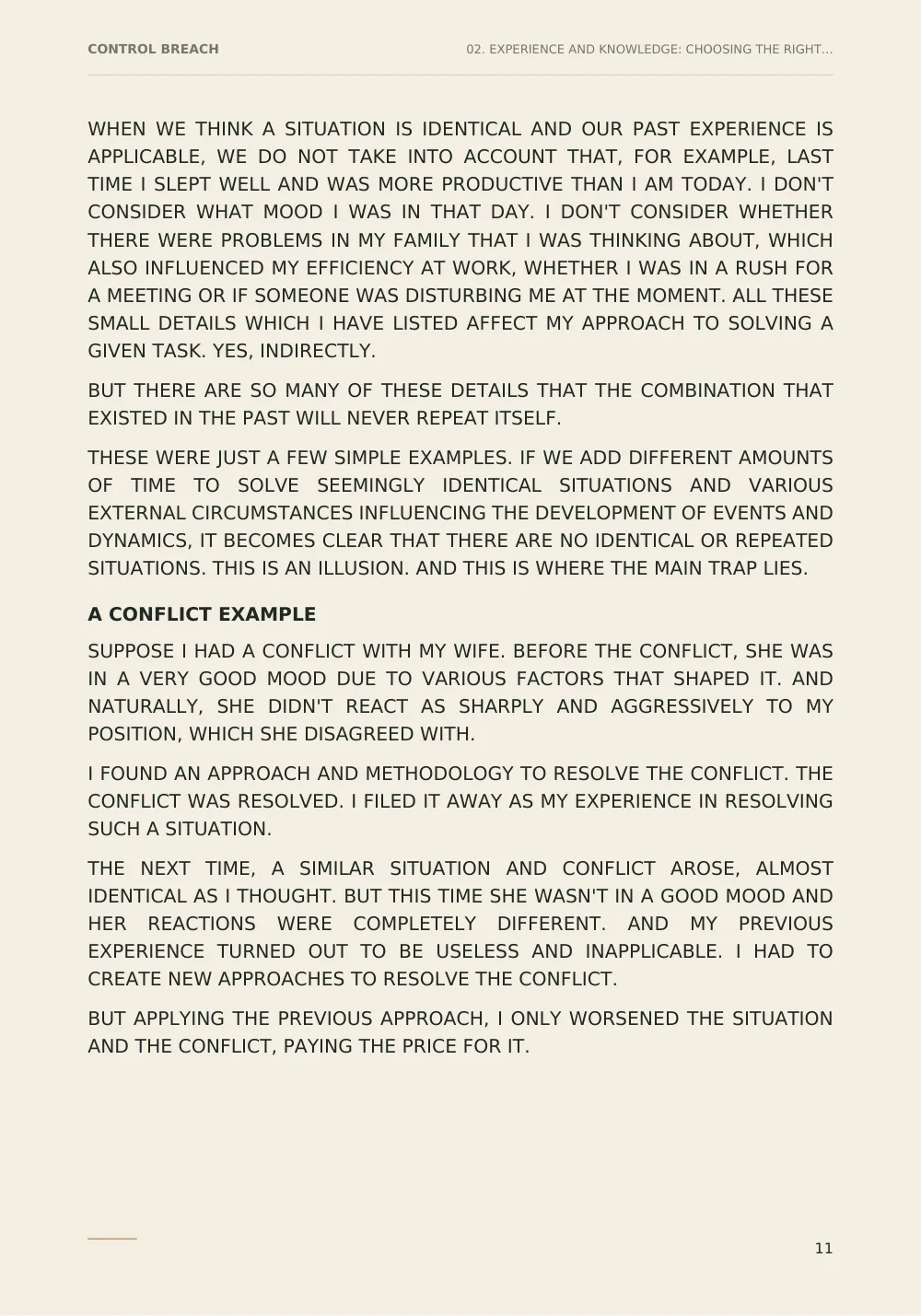
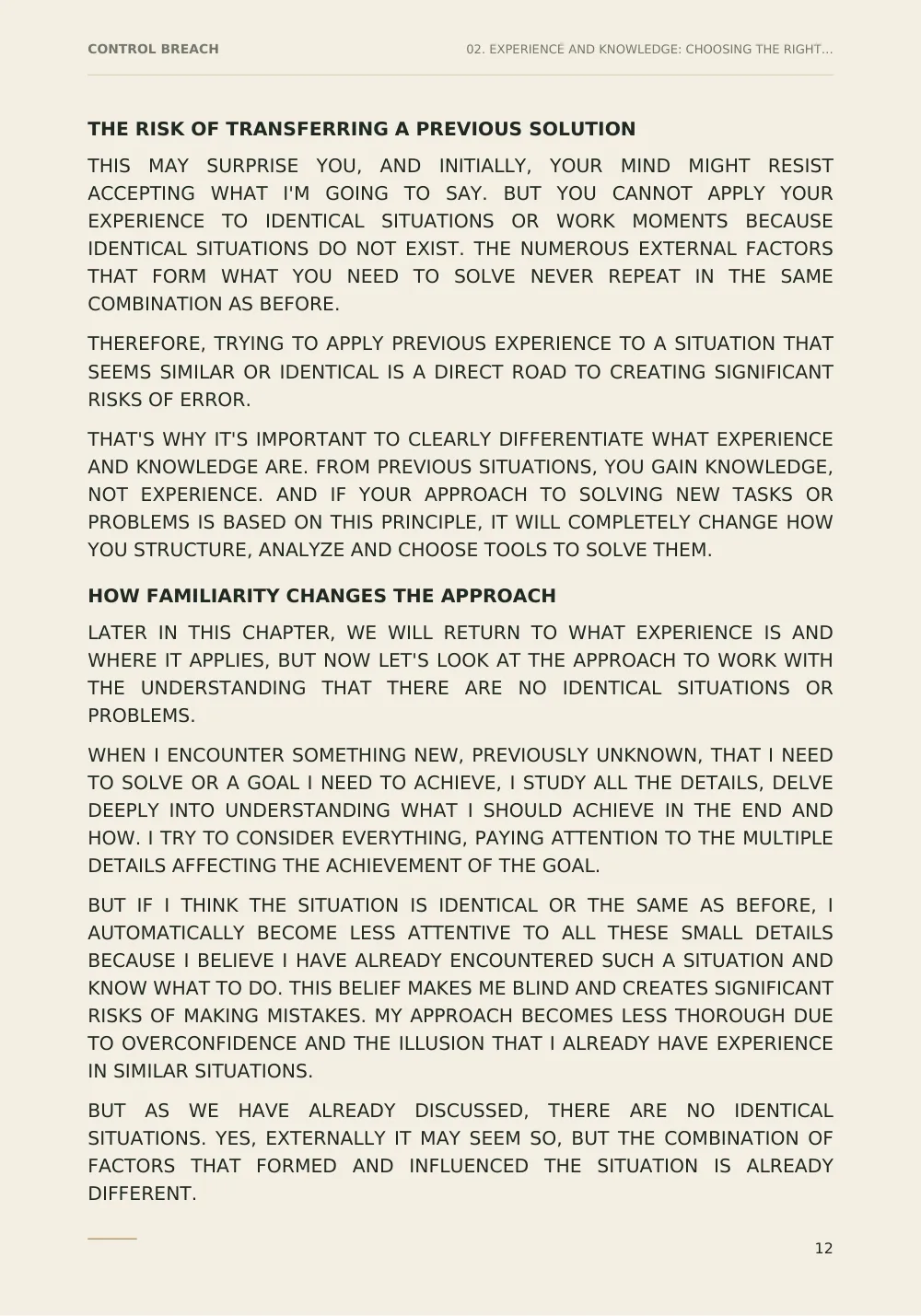
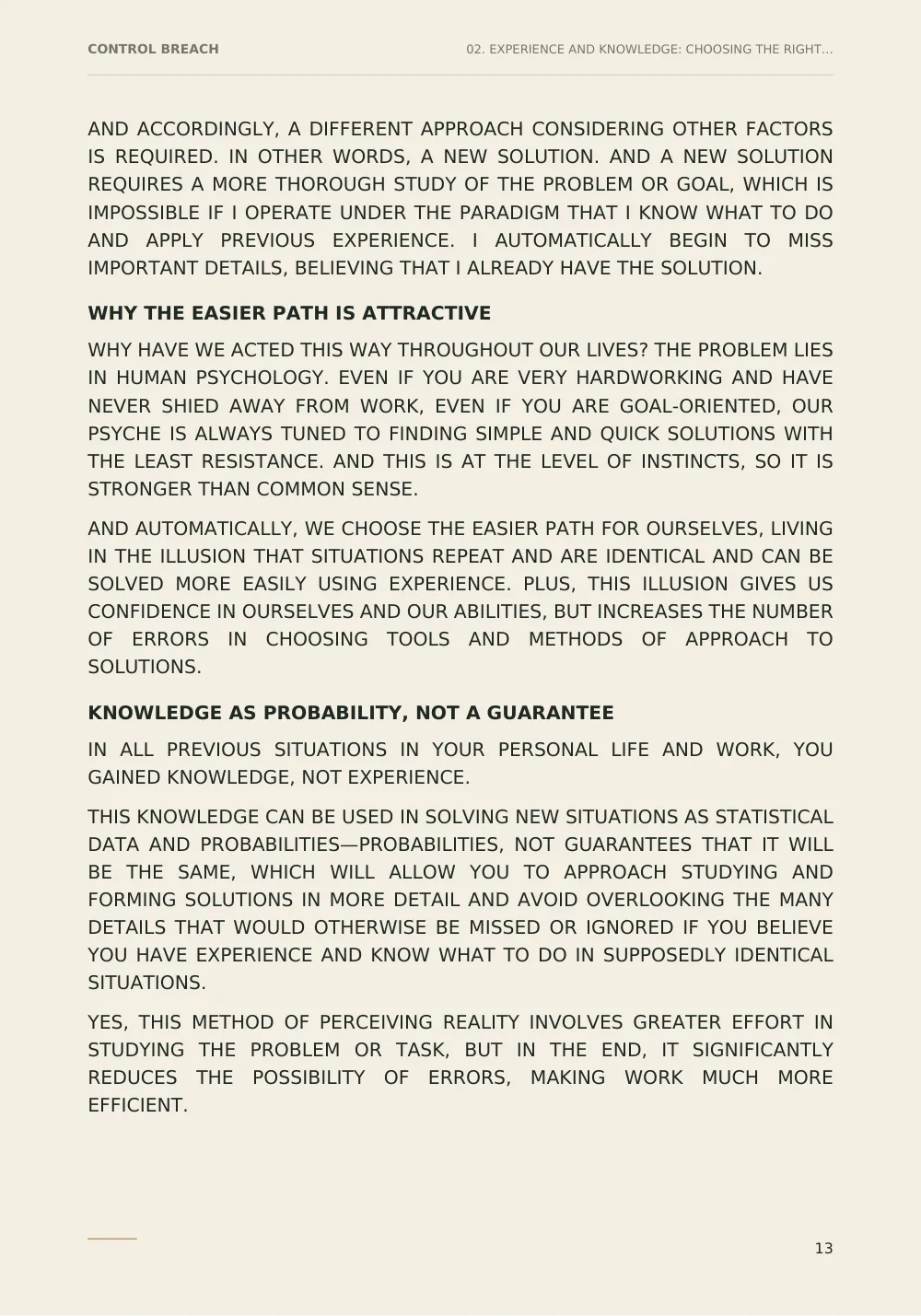
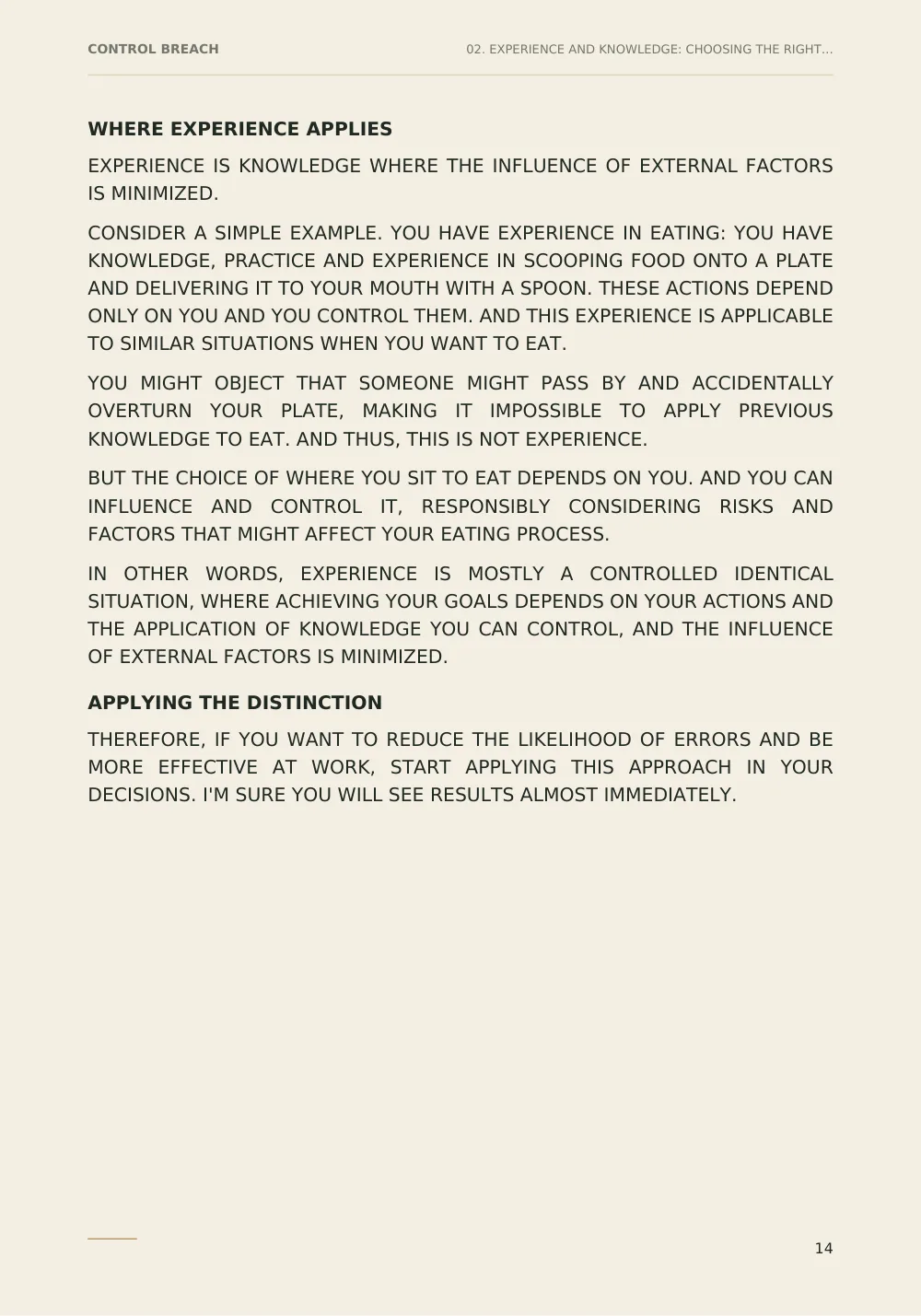
- 02Experience and knowledge: choosing the right approachFree
- 03The impact of people-pleasing behavior on business communication and organizational effectiveness
- 04Priority management in conditions of multitasking and unexpected schedule changes
- 05Prioritizing tasks within multilevel management
- 06Bottom-up initiative — the foundation of effective operational activity
- 07Mistakes in approaches to achieving goals
- 08Bridging the gap between expectations and reality
- 09Questions as the foundation of effective business communication
- 10Foundations of effective business communication: practical methods
- 11Interpersonal communication and the emergence of subgroups in a corporate environment
- 12Building a healthy team culture through effective communication
- 13Structured approaches to conflict resolution and prevention in high-performance work environments
- 14The impact of anger on professional functioning
- 15Stress: impact mechanisms and a practical strategy for maintaining effectiveness
- 16How to cope with stressful situations: the “outside observer” method
- 17Burnout as a consequence of control distortion
- 18Resistance to change
- 19Understanding and overcoming fears
- 20Managing internal resources
- 21Self-imposed limitations and the illusion of personal boundaries in professional growth
- 22Critical qualities for professional growth and effectiveness
- 23The ability to substantiate actions
- 24Laziness doesn’t exist: how we deceive ourselves to avoid action
- 25Responsibility
- 26Structured perception adjustment & response enhancement
- 27Proactivity and reactivity: a fundamental difference in employee effectiveness
- 28The correct process of acknowledging and correcting mistakes (personal responsibility)
- 29Conflict of goals
- 30Freedom to fail
- 31When multiple realities emerge
- 32Reducing the influence of feelings and emotions on work processes
- 33Team degradation or closed work cyclesFree
Who it is for
Written for people responsible for how work gets done
Business owners, team leaders and managers who want to examine recurring problems in communication, accountability and everyday decisions. Use the contents to start with the situation you are facing.
Before you buy
Questions
What exactly do I get?
One PDF file: CONTROL BREACH, 152 pages, 33 chapters, in English. You download it right after payment, and the download link also arrives by email.
Can I read part of it first?
Yes. Chapters 01, 02 and 33 are open on this page in full, with no sign-up. Open the book or press “Read 3 chapters free”.
Is this a subscription?
No. It is a one-time purchase of $19 (USD). There are no recurring charges.
Who is it for?
Business owners, team leaders and managers who want to examine recurring problems in communication, accountability and everyday decisions.
How can I pay?
By card, Apple Pay or Google Pay through Stripe’s secure checkout. We never see your card details.
CONTROL BREACH
152 pages · 33 chapters · English · PDF · $19
Decision support and professional reading, not legal, HR or financial advice.

