
Why do I agree to things in negotiations that I came in to refuse?
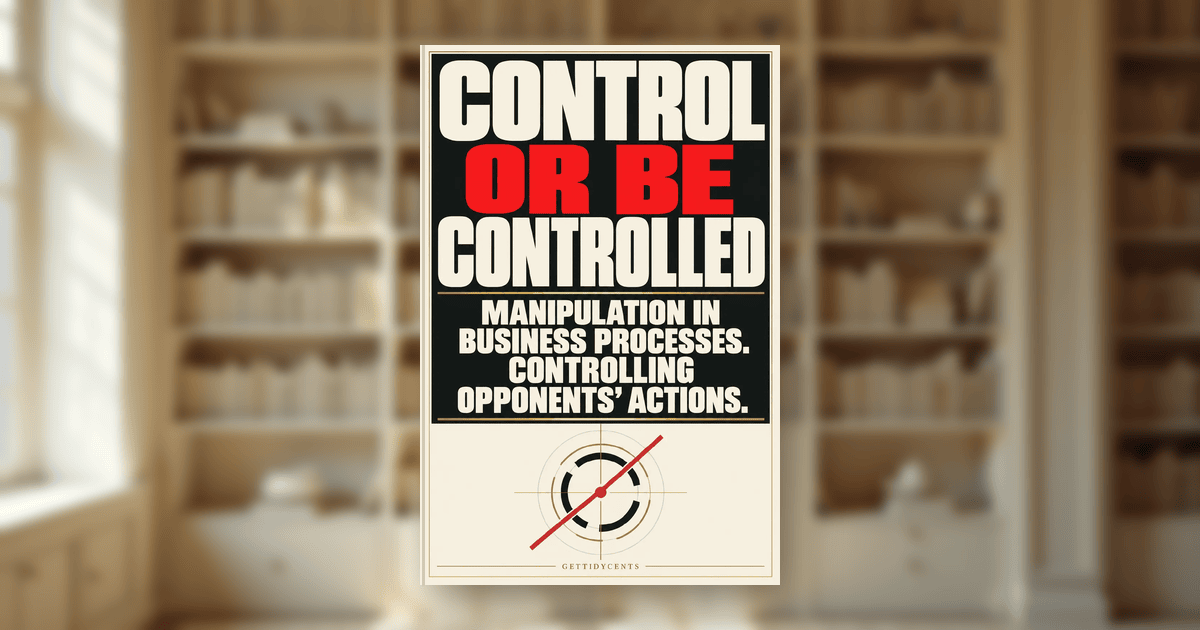
Most concessions are not won by a better argument. You arrive knowing your price, your limits and what you will not accept. An hour later you are discussing a different option — and nobody proved anything new. Somewhere in the conversation the question you came with was swapped for another one: whether you like this person, whether you owe them, whether you want to look reasonable, whether the future they describe sounds good.
That swap is the subject of CONTROL OR BE CONTROLLED, our 40-page book on sixteen influence techniques used in negotiations and at work. This article covers seven moments when a negotiation most often changes direction, what is usually happening underneath, and the first thing worth checking. The full analysis of each technique is in the book; the introduction and the first two chapters are free to read.
Why did I start trusting them so quickly?
Ten minutes in, the other side already feels like "one of us": the same town, the same industry pain, a mutual acquaintance, a shared joke about a competitor.
What is usually happening: closeness can be prepared in advance, and once it is there, checking the terms starts to feel impolite. The first free chapter, Bridges: how a stranger becomes "one of us", shows how this is built and what it is meant to achieve.
Where to look first: after the next friendly meeting, write down the terms you agreed to, without the conversation around them. Would you sign those terms with a stranger?
Why did a heated moment end in a "compromise" that only I paid for?
The discussion got tense, someone raised their voice, and the way out was a middle point that moved only your number.
What is usually happening: the focus moved from facts to emotions, and the relief of ending the tension was paid for with a concession. The second free chapter, Shifting the focus to emotions, takes this apart step by step.
Where to look first: when a compromise is offered right after a tense moment, ask what each side is actually giving up. If only one list is long, it is a concession, not a compromise.
Why did I start calculating the dream instead of the deal?
"Just imagine what this partnership could become in two years." The picture is attractive, and the numbers on the table stop getting checked.
What is usually happening: a vivid future replaces the calculation of the present offer. Chapter 3, "What if?": "Just imagine", covers how this works and what it is used for.
Where to look first: separate what is promised from what is written. Price the deal only on what is in the contract today.
Why do I feel I owe them something?
They gave you their time, a small favour, a "special" price on something minor. Saying no now feels ungrateful.
What is usually happening: gratitude is being turned into an obligation, and praise of your judgement makes it harder to disagree with what comes next. Chapters 5 and 6 cover the sense of obligation and the self-image trap — "Was I wrong about you?"
Where to look first: ask whether you asked for the favour. A gift you did not request does not create a debt in the deal.
Why did the decision criteria change halfway through?
You came to talk about price and payment terms. By the end you are discussing speed, prestige or "what really matters to you" — and the original criteria have quietly dropped out.
What is usually happening: the criteria for the decision are being re-defined for you, sometimes with your own words retold slightly differently. Chapters 11 and 13 — Shifting the criteria and Distorted retelling — show how a conversation moves you to a new question without anyone saying so.
Where to look first: write your three decision criteria before the meeting and check the final offer against that list, not against the one that emerged during the talk.
Why can the person across the table never decide?
Every concession you make is final. Every concession they make "needs approval" from someone who is never in the room.
What is usually happening: ambiguous authority lets one side collect your concessions while keeping theirs open. Related roles — feigned weakness, or "there are others who can take your place" — work on the same imbalance. These are chapters 8, 9 and 12.
Where to look first: before you move on price, ask who signs and what exactly they can approve today. Concede only to someone who can concede back.
Why am I suddenly the one who has to prove something?
The other side made a claim. Somehow it is now your job to show it is wrong — and until you can, it stands.
What is usually happening: the burden of proof has been shifted to you. Chapter 16, "Prove that I am wrong", describes the move and why it works so well under time pressure.
Where to look first: ask what their claim is based on before you start defending your position. A claim nobody has supported does not need a counter-proof.
What CONTROL OR BE CONTROLLED covers
Sixteen chapters and an afterword, grouped around five themes:
- Closeness and trust — "one of us", borrowed reputation, a common enemy.
- Emotions and obligation — heated compromises, "just imagine", gratitude, flattery.
- Who steers the conversation — directing the dialogue, shifting criteria, distorted retelling.
- Roles and positions — feigned weakness, contrasts, an approver who is never there, "let's solve it together".
- Keeping the question in view — after every technique: what it achieves, the goals it serves, and the calm questions that return the discussion to the terms.
The book does not teach you to see a trap in every friendly word. It helps you notice the moment one question was swapped for another, so you can return to the terms calmly — without turning the meeting into an argument.
Read the beginning free
The contents, the introduction and chapters 01 and 02 are open in full, with no sign-up:
- 01 — Bridges: how a stranger becomes "one of us".
- 02 — Shifting the focus to emotions: how "compromise" becomes a concession.
Open the book and read them here. The full PDF is 40 pages, a one-time purchase with instant download, available in eight languages.
FAQ
Does the book teach people to manipulate?
It explains how these techniques work so that you can recognize them in a negotiation or at work. Each chapter ends with how to notice the technique when it is used on you and how to bring the conversation back to the terms.
Who is it for?
Business owners, managers, salespeople and anyone who negotiates with suppliers, clients, partners or their own team.
Is it legal or financial advice?
No. It is professional reading. For legal or financial questions about a specific deal, talk to a qualified professional.


