Zero-Based-Budgeting: wie du jedem Dollar eine Aufgabe gibst
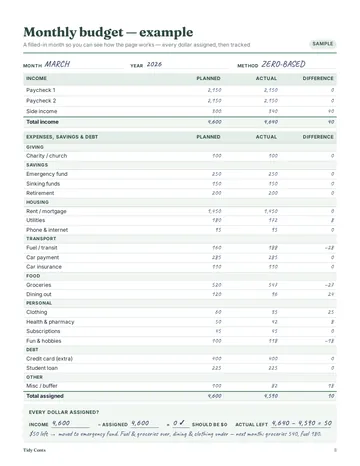
Die meisten Budgets sind ein Protokoll dessen, was passiert ist. Zero-Based-Budgeting ist eine Anweisung, die erteilt wird, bevor irgendetwas passiert: Jeder Dollar, der diesen Monat ankommt, bekommt im Voraus eine benannte Aufgabe, bis nichts mehr unverteilt ist.
Die ganze Methode ist eine Zeile Arithmetik.
einkommen − zuteilungen = 0
Diese Null ist der Kern, und genau sie wird missverstanden. Sie bedeutet nicht, alles auszugeben. Geld, das deinem Notgroschen, deiner Altersvorsorge oder einer Autoinspektion in neun Monaten zugeteilt ist, ist zugeteilt. Es ist nur nicht unverteilt. Unverteiltes Geld ist das Problem, für das die Methode existiert, denn unverteiltes Geld wird zuverlässig zu ausgegebenem Geld, ohne dass irgendjemand das entschieden hat.
Hier ist ein Monat, komplett durch.
Der Monat
Ein Haushalt mit zwei Verdienern. Nettoeinkommen nach Steuern, an zwei Terminen:
| Einkommen | Betrag |
|---|---|
| Gehalt, am 1. | $2,350 |
| Gehalt, am 15. | $2,350 |
| Teilzeitjob des Partners | $700 |
| Zu verteilen insgesamt | $5,400 |
Zur Einordnung: Das US Bureau of Labor Statistics meldete für 2024 durchschnittliche Jahresausgaben von $78,535 pro Verbrauchereinheit, bei einem durchschnittlichen Einkommen vor Steuern von $104,207 (Consumer Expenditures — 2024, veröffentlicht am 19. Dezember 2025). Dieser Haushalt gibt weniger als diesen Durchschnitt aus, und das solltest du wissen, bevor du deine eigenen Zahlen mit denen anderer vergleichst.
Jetzt die Zuteilungen, in fünf Gruppen.
Fixe Rechnungen — $2,684
Gleicher Betrag, gleiches Datum, keine Entscheidung nötig.
| Zeile | Betrag |
|---|---|
| Miete | $1,650 |
| Strom und Gas | $155 |
| Wasser | $45 |
| Internet | $60 |
| Zwei Handyverträge | $70 |
| Kfz-Versicherung | $142 |
| Hausratversicherung | $18 |
| Kinderbetreuung | $480 |
| Streaming und Fitnessstudio | $64 |
| Zwischensumme | $2,684 |
Alltagsausgaben — $1,135
Variabel, und hier wird der Monat tatsächlich gewonnen oder verloren.
| Zeile | Betrag |
|---|---|
| Lebensmittel | $620 |
| Auswärtsessen und Kaffee | $180 |
| Sprit | $185 |
| Haushalt und Körperpflege | $95 |
| Tierfutter und Tierarzt-Tarif | $55 |
| Zwischensumme | $1,135 |
Rücklagen — $325
Bekannte Kosten, die nicht monatlich kommen. Jede ist ein Jahresbetrag geteilt durch zwölf.
| Zeile | Pro Monat | Pro Jahr |
|---|---|---|
| Autoinspektion und Reifen | $90 | $1,080 |
| Zulassung | $20 | $240 |
| Weihnachten und Geburtstage | $65 | $780 |
| Zahnarzt und Gesundheit | $50 | $600 |
| Reparaturen am Haus | $60 | $720 |
| Kleidung | $40 | $480 |
| Zwischensumme | $325 | $3,900 |
Schulden — $612
| Zeile | Betrag |
|---|---|
| Mindestrate Kreditkarte | $95 |
| Extra auf die Kreditkarte | $205 |
| Autokredit | $312 |
| Zwischensumme | $612 |
Sparen — $644
| Zeile | Betrag |
|---|---|
| Notgroschen | $444 |
| Zusätzliche Altersvorsorge | $200 |
| Zwischensumme | $644 |
Die Bilanz
| Gruppe | Zugeteilt | Anteil am Einkommen |
|---|---|---|
| Fixe Rechnungen | $2,684 | 49.7% |
| Alltagsausgaben | $1,135 | 21.0% |
| Rücklagen | $325 | 6.0% |
| Schulden | $612 | 11.3% |
| Sparen | $644 | 11.9% |
| Insgesamt zugeteilt | $5,400 | |
| Einkommen | $5,400 | |
| Noch zu verteilen | $0 |
Die Anteile sind auf eine Nachkommastelle gerundet und ergeben daher 99.9%. Die Dollar ergeben genau $5,400, und das ist die Spalte, die stimmen muss.
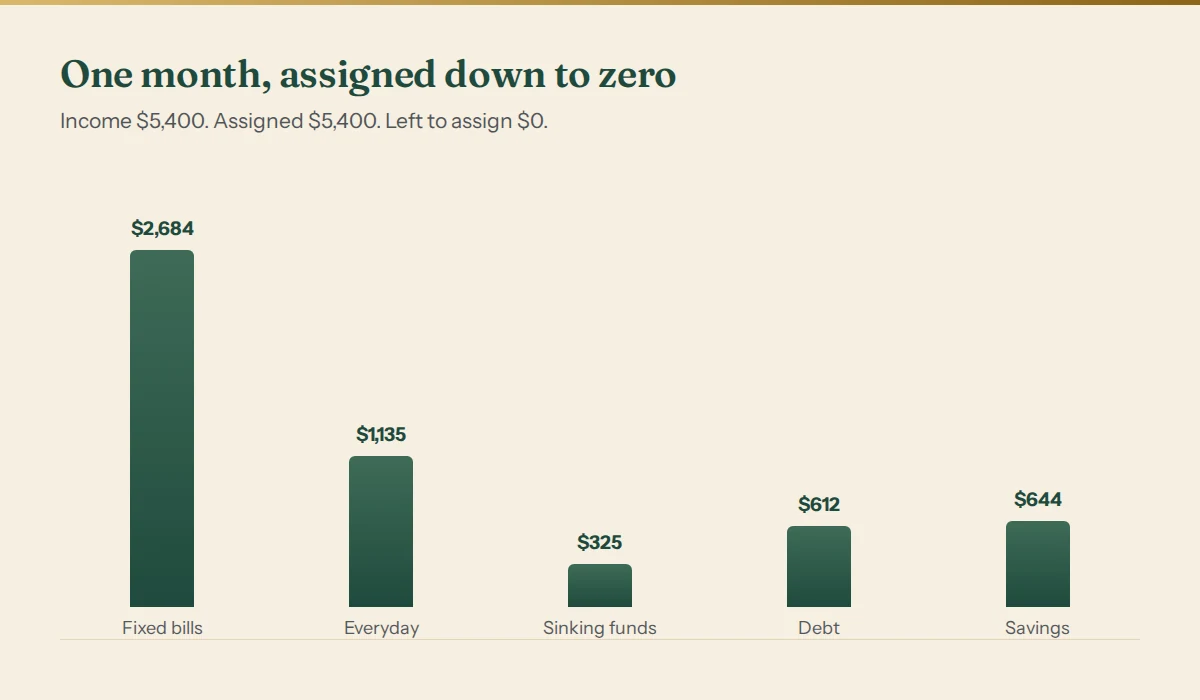
Schau dir die Notgroschen-Zeile an: $444. Nicht $450, nicht $400. Die letzte Zeile, die du ausfüllst, ist das, was die Spalte ausgleicht, und diese krumme Zahl zeigt, dass die Methode funktioniert, nicht dass ein Rundungsfehler passiert ist. Wenn du merkst, dass du die letzte Zeile auf etwas Hübsches rundest, machst du kein Zero-Based-Budgeting mehr, sondern ungefähres Budgetieren — genau das, was du hinter dir lassen wolltest.
Schau dir auch an, dass die fixen Rechnungen 49.7% des Einkommens beanspruchen, bevor eine einzige freie Entscheidung getroffen wurde. Das ist die nützlichste Zahl auf der Seite, und sie ist in jedem Budget unsichtbar, das die Summe nicht erzwingt. Die Hälfte des Geldes dieses Haushalts ist verplant, bevor irgendwer irgendetwas wählt.
Rücklagen sind der Teil, der alles zusammenhält
Die Gruppe mit $325 wirkt klein, und sie ist der Grund, warum das Ganze den März übersteht.
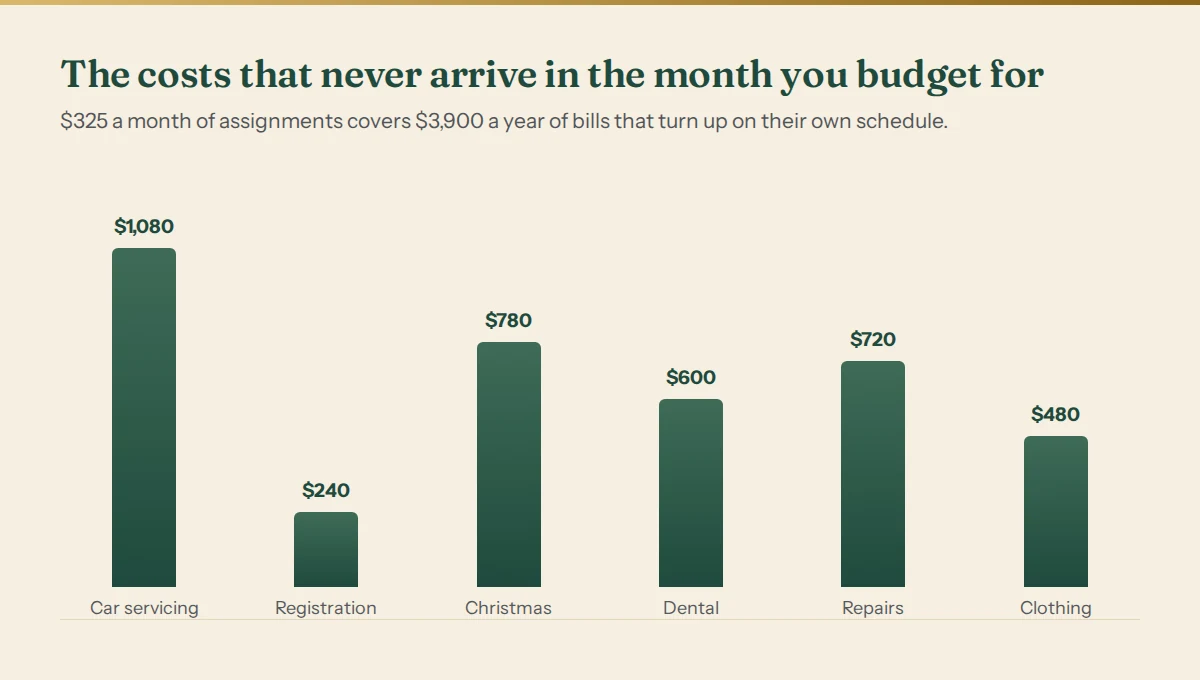
Diese sechs Kosten ergeben $3,900 im Jahr. In einem Budget ohne Rücklagen sind sie nicht niedriger, sie sind nur nicht eingeplant: Sie tauchen als Inspektion für $540 in einem Monat auf, in dem dafür kein Platz war, und landen auf der Karte. Rücklagen sind einfach das Eingeständnis, dass die Inspektion keine Überraschung ist. Du weißt, dass sie kommt, du weißt ungefähr, was sie kostet, und das einzige echte Unbekannte ist der Monat.
Teile diesen Zeilen jeden Monat $325 zu, und die Weihnachtsausgaben im Dezember und die Inspektion im April sind bezahlt, wenn sie anstehen. Deshalb ist „Ich habe diesen Monat nichts gespart, aber es ist auch nichts schiefgegangen“ ein irreführendes Gefühl für einen Monat. Der eigene Ratgeber zu Rücklagen zeigt, wie du die Jahresbeträge festlegst.
Ein Plausibilitätscheck für deine Kategorien
Wenn du noch nie ein vollständiges Budget geschrieben hast, ist das Schwerste nicht die Arithmetik. Sondern nicht zu wissen, ob $620 für Lebensmittel vernünftig sind.
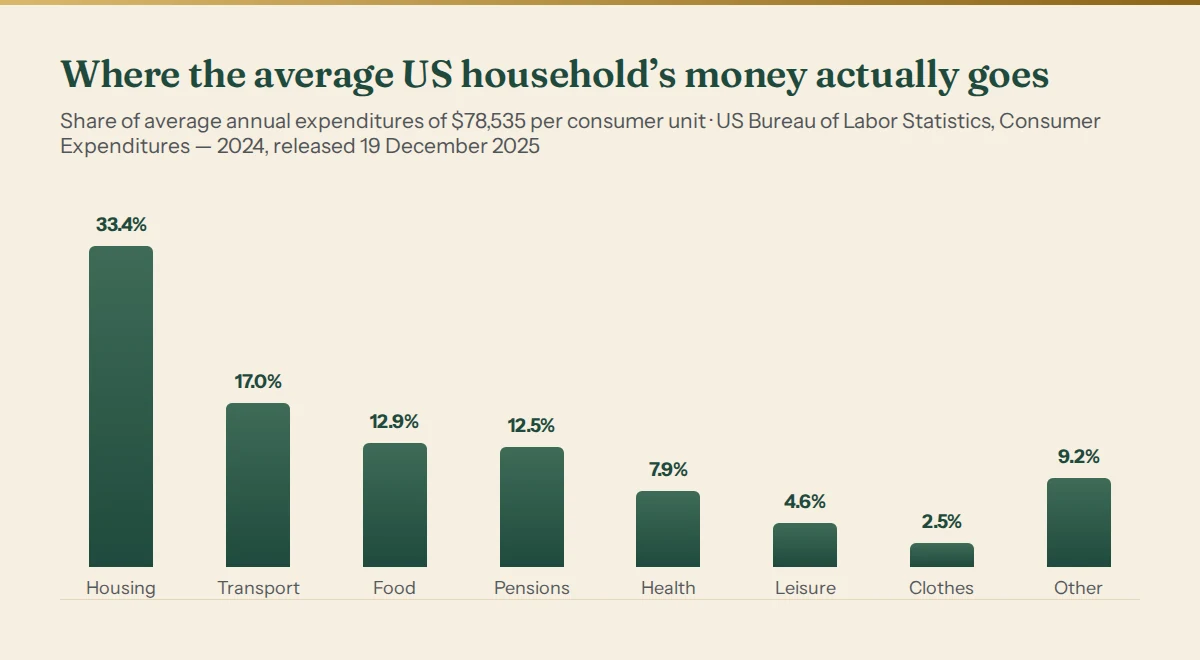
In dieser Erhebung entfielen 33.4% aufs Wohnen, 17.0% auf Mobilität, 12.9% auf Essen (davon $6,224 im Jahr zu Hause und $3,945 auswärts), 12.5% auf private Versicherungen und Altersvorsorge, 7.9% auf Gesundheit, 4.6% auf Unterhaltung und 2.5% auf Bekleidung und Dienstleistungen.
Nutze das als Bezugspunkt, nicht als Ziel. Die Wohnkosten des BLS sind breiter als nur die Miete, denn sie umfassen Nebenkosten, Haushaltsführung und Einrichtung; die vergleichbaren Zeilen im Beispielmonat (Miete, Gas und Strom, Wasser, Internet) ergeben $1,910 oder 35.4% des Einkommens. Nah genug am landesweiten Bild, um diesem Haushalt zu sagen, dass das Wohnen nicht sein Ausreißer ist. Deine Kategorien können stark vom Durchschnitt abweichen und für dich trotzdem richtig sein. Wofür der Vergleich taugt: die Zeile zu finden, die doppelt so hoch ist wie bei allen anderen — meist eine Zeile, die du dir seit zwei Jahren nicht angesehen hast.
Was passiert, wenn du zu viel ausgibst
Nach zwei Wochen haben die Lebensmittel $693 gegenüber den zugeteilten $620 verbraucht. In einem normalen Budget ist das ein Scheitern, das man notiert und vergisst. Beim Zero-Based-Budgeting ist es eine Rechenaufgabe mit genau einer zulässigen Lösung: Das Geld muss aus einer anderen benannten Zeile kommen.
| Zeile | Vorher | Jetzt |
|---|---|---|
| Lebensmittel | $620 | $693 |
| Auswärtsessen und Kaffee | $180 | $107 |
| Summe Alltagsgruppe | $1,135 | $1,135 |
Die Gruppe ergibt weiter $1,135, und der Monat geht weiter auf null auf. Nichts ist schiefgegangen — eine Entscheidung wurde getroffen und festgehalten, und genau dafür ist ein Budget da. Die Alternative, still $73 drüber zu sein und es am Monatsende zu merken, sind dieselben $73 ohne jede Information.
Das ist die Gewohnheit, die die Methode funktionieren lässt, und genau die lassen Leute aus. Zero-Based-Budgeting ist kein einmaliger Planungsakt am 1. Es ist ein laufender Abgleich: Wann immer eine Kategorie überzogen wird, wird am selben Tag eine andere gekürzt.
Wo Zero-Based-Budgeting wirklich scheitert
Drei echte Arten des Scheiterns. Keine davon lässt sich mit mehr Anstrengung beheben.
1. Unregelmäßiges Einkommen. Die Methode beginnt mit der Frage, wie viel Geld du diesen Monat bekommst. Arbeitest du freiberuflich, auf Provision oder von Trinkgeld, weißt du das nicht, und ein Budget auf einer Schätzung ist schlimmer als keins. Plane auch nicht mit deinem Durchschnittsmonat — ein Durchschnitt ist eine Zahl, die du oft nicht erreichst. Setz dir ein festes Gehalt an dich selbst auf einem vorsichtigen Perzentil deiner eigenen Historie, verteile jeden Monat diesen Betrag auf null und lass den Überschuss aus guten Monaten in einem Puffer liegen. Die Perzentil-Methode für unregelmäßiges Einkommen zeigt die Rechnung.
2. Der erste Monat ist wirklich überwältigend. Fünfundzwanzig Posten aus dem Gedächtnis in einer Sitzung — so sterben die meisten Versuche. Die Budgeting Survey 2026 von Debt.com (veröffentlicht am 13. Juli 2026, 1,051 US-Erwachsene) ergab, dass unter denen, die kein Budget führen, „es kostet zu viel Zeit“ erstmals der wichtigste Grund war, genannt von 34% der Nicht-Budgetierenden, nach 16% im Vorjahr — und weitere 24.34% sagten, sie hätten früher budgetiert, aber es habe ihnen nie geholfen. Beides sind Klagen über Aufwand und Ertrag, nicht über Arithmetik. Die Lösung: Fang mit den fixen Rechnungen und einer Alltagskategorie an, teile alles andere einer einzigen Zeile namens „Sonstiges“ zu und teile diese Zeile in den folgenden zwei Monaten auf, während du lernst, was tatsächlich darin steckt. Ein Budget mit sechs Zeilen, das du durchhältst, schlägt eines mit fünfundzwanzig, das du am 9. aufgibst.
3. Das Übertragsproblem. Davor warnt dich niemand. Am Monatsende liegen über die Alltagskategorien verteilt $118 unausgegeben herum. Was passiert damit? Es gibt nur zwei schlüssige Antworten, und das Scheitern besteht darin, keine zu wählen.
- Vortragen. Die Lebensmittel des nächsten Monats starten mit $118 darin. Bequem, und es bläht still deine Basis auf, bis du nicht mehr weißt, was ein normaler Monat kostet.
- Abräumen. Setz jede Alltagskategorie am Monatsende auf null, verschieb die $118 auf ein benanntes Ziel und starte den nächsten Monat von deinen Zuteilungen aus. Sauberer, und jeder Monat wird mit dem letzten vergleichbar.
Abräumen ist der bessere Standard, mit einer Ausnahme: Rücklagen müssen immer vorgetragen werden, denn das Vortragen ist ihr ganzer Zweck. Eine Rücklage für die Autoinspektion, die jeden Monat auf null abgeräumt wird, ist keine Rücklage. Die Regel lautet also: Rücklagen werden vorgetragen, Alltagskategorien abgeräumt, und was was ist, entscheidest du beim Anlegen der Zeile, nicht am Monatsende, wenn du das Geld willst.
Es gibt eine vierte Situation, die kein Scheitern der Methode ist, aber oft dafür gehalten wird. Übersteigen deine fixen Rechnungen und Mindestraten dein Einkommen, behebt das keine Reihenfolge der Zuteilung. Zero-Based-Budgeting sagt dir das beim ersten Versuch, klar und in Dollar — eine wirklich nützliche Information, aber nicht dasselbe wie eine Lösung. Das ist ein Fall für kostenlose, seriöse Schuldnerberatung, nicht für eine bessere Tabelle.
Jeden Monat durchführen
- Starte mit dem Plan des Vormonats, nicht mit einer leeren Seite. Ab dem dritten Monat ändern sich fixe Rechnungen und Rücklagen kaum noch, und die Übung dauert fünfzehn Minuten.
- Trag zuerst das Einkommen ein, und nur Geld, bei dem du dir sicher bist. Ein Bonus, den du vielleicht bekommst, wird zugeteilt, wenn er ankommt, nicht vorher.
- Teile der Reihe nach zu: fixe Rechnungen, dann Rücklagen, dann Mindestraten, dann Alltagsausgaben, dann alles Übrige ins Sparen und in zusätzliche Tilgung.
- Erzwinge die Null. Die letzte Zeile bekommt eine krumme Zahl. Lass sie.
- Gleiche wöchentlich ab und verschieb Geld zwischen Zeilen, wann immer eine Kategorie überzogen wird.
- Räum am Monatsende die Alltagskategorien ab, trag die Rücklagen vor und fang wieder an.
Schritt 4 ist der einzige, der eine laufende Summe braucht, die sich beim Tippen aktualisiert, und deshalb gehört diese Methode in eine Tabelle statt auf Papier. Unsere Große Jahresbudget-Tabelle macht die Null-Prüfung für alle zwölf Monate, mit Rücklagensalden, die sich von selbst vortragen, und der Budgetplaner nach Gehaltseingang macht dasselbe pro Zahltag, wenn dein Geld zweimal im Monat statt einmal kommt. Oder bau es selbst: Alles oben sind fünfundzwanzig Zeilen, ein SUM und eine Zelle, die es von deinem Einkommen abzieht.
Die Kurzfassung
Gib jedem Dollar vor Monatsbeginn eine benannte Aufgabe, erzwinge, dass die Summe genau deinem Einkommen entspricht, und lass die letzte Zeile eine krumme Zahl sein. Finanziere die unregelmäßigen Kosten monatlich, damit sie keine Notfälle mehr sind. Wenn du zu viel ausgibst, verschieb das Geld noch am selben Tag aus einer benannten Zeile, statt es hinterher zu bemerken. Räum am Monatsende die Alltagskategorien ab und trag die Rücklagen vor. Und wenn dein Einkommen nicht in vorhersehbaren Portionen kommt, löse zuerst dieses Problem, denn Zero-Based-Budgeting hat keine Antwort auf eine Frage, die es nicht stellen kann.
Quellen: US Bureau of Labor Statistics, „Consumer Expenditures--2024“ (Pressemitteilung USDL-25-1586, veröffentlicht am 19. Dezember 2025); Budgeting Survey 2026 von Debt.com (veröffentlicht am 13. Juli 2026, 1,051 US-Erwachsene, erhoben über SurveyMonkey).