 1 / 40
Touchez une image pour l’agrandir, puis faites glisser ou utilisez les flèches pour parcourir toutes les feuilles.
La plupart des documents de budget à imprimer supposent que vous penserez à vous en servir. Ce classeur de 38 pages suppose le contraire. Il est construit autour des quatre choses qui rendent l'argent réellement plus difficile avec un TDAH — l'impulsivité, la cécité temporelle, la mémoire de travail et l'évitement — et il confie le plus de travail possible à l'automatisation et au papier, pour que la part qui vous reste tienne en quinze minutes par semaine.
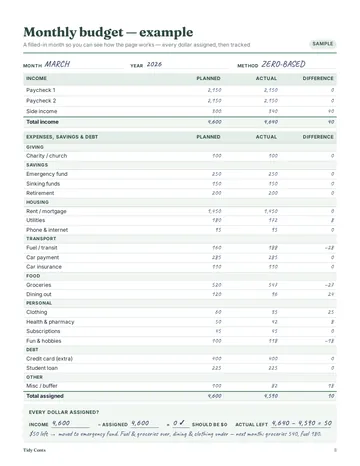
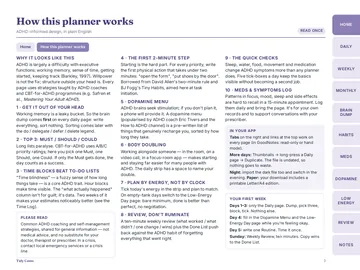
Vous commencez par une mise en route de 15 minutes (six étapes, un minuteur, pas de lecture en avance), puis une carte de l'argent sur une page qui montre les revenus qui arrivent, les factures fixes qui partent en prélèvement automatique, l'épargne qui sort avant que vous ne la voyiez, et un seul chiffre hebdomadaire pour vivre. Ensuite : une checklist de factures en pilote automatique où chaque facture reçoit à la fois un paiement automatique et un rappel, une chasse aux abonnements guidée à travers votre application bancaire, l'App Store et vos e-mails, seize cartes pause anti-achat impulsif au format portefeuille à découper, une liste d'envies à 24 heures, un plan d'argent plaisir compatible avec la dopamine, un suivi des frais de retard qui compte la « taxe TDAH » sans vous faire honte, un thermomètre du fonds d'urgence, et un script de rendez-vous argent hebdomadaire que vous pouvez dérouler avec un partenaire de présence.
L'écriture est simple et honnête, et elle cite ses sources : le modèle des fonctions exécutives du TDAH de Barkley, les travaux méta-analytiques sur la dévalorisation temporelle, la recherche sur les options par défaut et les intentions de mise en œuvre, et les études sur les petites victoires derrière la boule de neige des dettes. Il y a une mention claire « ceci n'est ni un conseil médical ni un conseil financier », une page pour le jour où vous arrêtez de vous en servir puis revenez, et une fiche frigo qui comprime tout le système en huit lignes. US Letter et A4, couleur et économe en encre, avec un sommaire cliquable.
Ce que vous recevez
- 38 pages, prêtes à imprimer, avec un sommaire cliquable
- Conçu autour du déficit des fonctions exécutives, et non un budget générique avec une étiquette TDAH sur la couverture
- Carte de l'argent sur une page : revenus qui entrent → factures fixes → épargne → un seul chiffre hebdomadaire, dessinée comme un flux
- Checklist factures en pilote automatique : chaque facture reçoit un prélèvement automatique ET un rappel, pour qu'un paiement échoué soit remarqué
- Chasse aux abonnements : un chemin de recherche précis dans votre application bancaire, l'App Store / Google Play, vos e-mails et PayPal
- 16 cartes pause au format portefeuille à découper : la règle des 24 heures, « est-ce la dopamine qui parle ? », les cinq questions, et d'autres
- Rendez-vous argent hebdomadaire de 15 minutes avec un ordre du jour minuté et des suggestions de présence partagée
- Suivi des frais de retard qui nomme le mécanisme derrière chaque frais et la façon d'y remédier
- Thermomètre du fonds d'urgence (premier objectif 500), grille de gommettes d'épargne et journal des victoires d'argent
- Jour des factures en basse énergie, une page de redémarrage pour quand le système lâche, et quatre scripts d'appel téléphonique
- US Letter + A4, couleur + économe en encre, fonctionne dans GoodNotes et Notability comme sur papier
Voir toutes les pages
Cliquez sur une page pour l'agrandir.


Ce qu'il y a dedans
Questions
En quoi est-ce différent d'un document de budget à imprimer ordinaire ?
Un budget ordinaire vous demande de suivre chaque catégorie, de retenir chaque date d'échéance et de compter sur votre volonté à la caisse. Celui-ci déplace le plus possible hors de votre mémoire : des checklists d'automatisation, un seul chiffre hebdomadaire au lieu de dix-neuf catégories, des cartes pause physiques, des suivis visuels, une routine hebdomadaire de 15 minutes, et des pages écrites spécialement pour les mauvais jours et pour redémarrer après un arrêt. Chaque page existe à cause d'une difficulté précise des fonctions exécutives.
Puis-je l'utiliser en numérique au lieu de l'imprimer ?
Oui. Les PDF s'importent dans GoodNotes, Notability, Noteshelf, Xodo, Penly et tout autre annotateur de PDF, et le sommaire est cliquable pour passer d'une section à l'autre. Les pages sont au format portrait Letter et A4 plutôt qu'au format iPad paysage, donc elles ressemblent à du papier sur une tablette. Les cartes pause à découper sont la seule partie qui gagne vraiment à être imprimée.
Est-ce un conseil médical ou financier ?
Non. C'est un outil de planification général à visée éducative. Il ne diagnostique ni ne traite quoi que ce soit et il ne remplace pas votre médecin, votre prescripteur, votre psychothérapeute, votre coach TDAH ou un conseiller financier qualifié. Si vous faites face à des dettes ou à des impayés, le classeur vous oriente vers les services gratuits et réglementés de conseil en surendettement plutôt que de prétendre les remplacer.
Faut-il un diagnostic de TDAH pour s'en servir ?
Non. C'est écrit pour toute personne dont le cerveau perd le fil de l'argent de ces manières-là — y compris les personnes qui s'identifient elles-mêmes, celles qui attendent une évaluation, ou celles qui vivent avec quelqu'un de concerné. Rien dedans n'exige un diagnostic ni un traitement médicamenteux.
Cela fonctionne-t-il pour un couple ou un foyer ?
Oui, avec une réserve : c'est une licence d'usage personnel pour un foyer, et les pages sont conçues pour un seul jeu de chiffres. Beaucoup de couples l'utilisent avec un compte commun pour les factures et un rendez-vous argent par semaine — la page du rendez-vous argent propose deux règles de base pour cela (pas de surprises, pas de comptes à régler). Si vous voulez chacun votre liste d'envies et vos pages d'argent plaisir, imprimez-les deux fois.
Dans quelle devise est-il ?
Aucune. Les colonnes de montants sont vides et les rares exemples traités évitent tout symbole, donc cela fonctionne avec des dollars, des livres, des euros ou n'importe quoi d'autre. Les dates s'écrivent en jour et mois plutôt que dans un format figé, et le calendrier est sans date.
Est-il daté ? Va-t-il s'épuiser ?
Il est totalement sans date. Imprimez les pages hebdomadaires et mensuelles autant de fois que vous voulez, pendant autant d'années que vous voulez. Les mises à jour à vie gratuites sont incluses avec votre achat.
Licence d'usage personnel pour un foyer. Ni revente ni redistribution. Livré sous forme de fichier ZIP à télécharger immédiatement après le paiement. Aucun article physique n'est expédié.
Classeur Budget TDAH
Un système d'argent à imprimer conçu autour du déficit des fonctions exécutives : carte de vos finances sur une page, factures en pilote automatique, cartes pause anti-achat impulsif et un rendez-vous argent de 15 minutes
Payez par carte, Apple Pay ou Google Pay
- Fonctionne dans tous les pays · dans votre devise
- Les fichiers à l’intérieur sont en anglais.
- Lien de téléchargement sur la page de confirmation et par e-mail
- Ce qu’il vous faut: PDF · US Letter et A4 · compatible GoodNotes / Notability
- Remboursement sous 14 jours, pour tout achat
- 38 pages
- Formats: PDF · US Letter + A4 · couleur + économie d'encre
- Fichier ZIP: 3.3 MB
Tout achat est remboursé si vous le demandez dans les 14 jours suivant le paiement. Les fichiers qui ne s’ouvrent pas et tout ce qui ne correspond pas à sa description sont remboursés intégralement à tout moment, sans limite de durée.